
Accommodating Asylum Seekers
Date running: ongoing
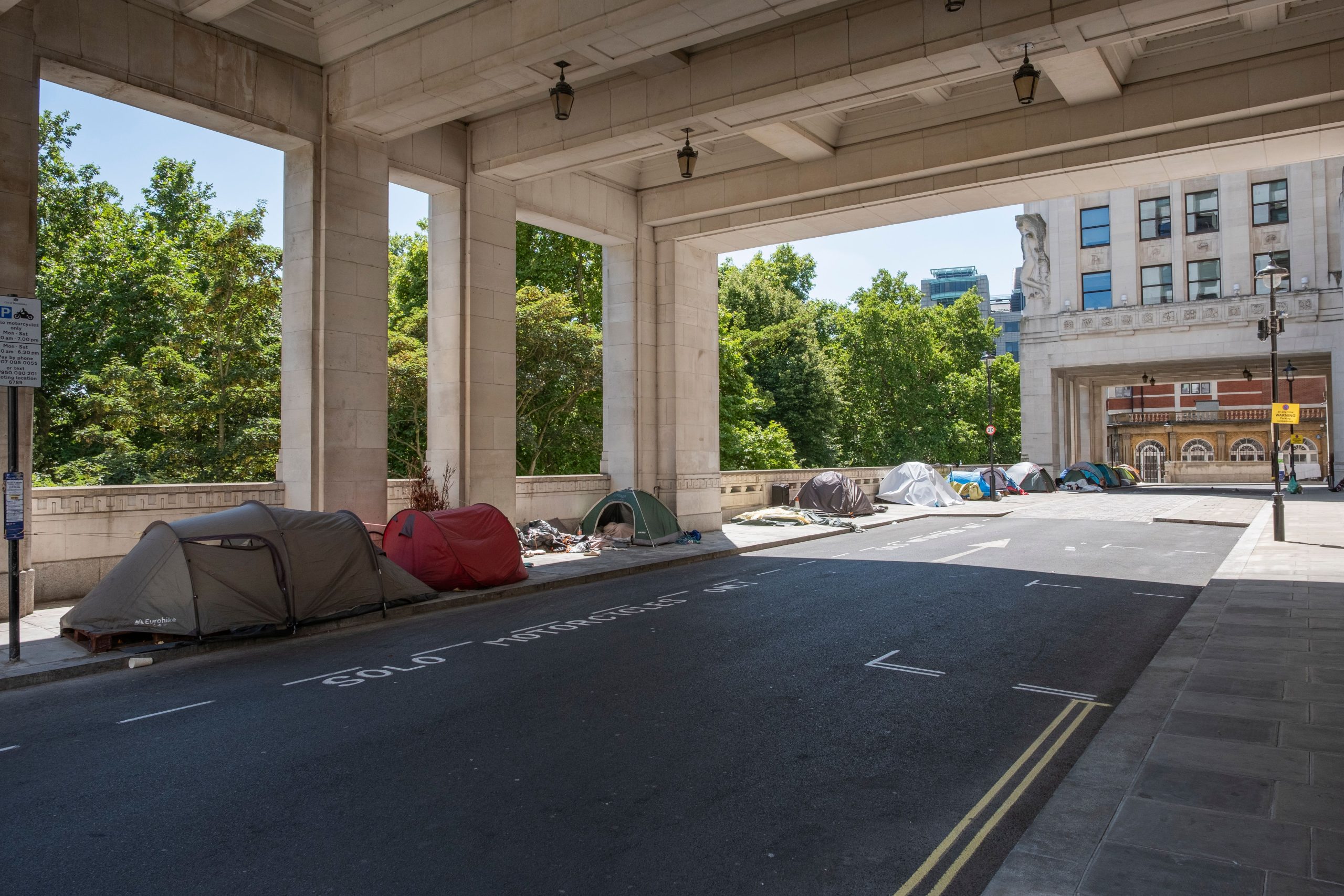
In recent years, Europe has witnessed a proliferation of types of accommodation for asylum seekers and refugees, including army barracks, schools, hotels, ships, rural houses, public housing apartments, containers, airports, and tents – as well as purpose-built centres. This proliferation of types of accommodation is engendering a variety of scholarly and policy debates, which the project critically contributes to.
Publications
Doná, G., A. Lindley, P. Novak, and C. Sanders. 2025. As protesters and politicians call for the closure of asylum hotels, what are the alternatives? The Conversation
Novak P. (2025) Buildings of Refuge and the Postcoloniality of Asylum Infrastructure. Bristol: Bristol University Press
Novak P. (2025) Five lessons the UK can learn from Italy’s asylum accommodation crisis SOAS Blogs
Lindley, A., A. Mamo, and H. Reed. 2024. Home Beyond the Home Office: Addressing Refugee Move-On Challenges in the Oxford Area. Oxford: Asylum Welcome
Doná, G., A. Lindley, P. Novak, and C. Sanders. 2023. Shades Of Carcerality? Reflections On Asylum Accommodation In Italy, France And The UK Border Criminologies Blog
Doná, G., C. Brun, and A. Fabos. 2023. “Home and forced migration”, In Handbook on Home and Migration, edited by P. Boccagni, 42–54. Cheltenham, UK: Edward Elgar Publishing.
Lindley, A. 2023. Supporting Sanctuary-Seekers to find Housing in Wales. Mid-Term Evaluation Tai Pawb Refugee and Asylum Seeker Housing Project.
Lindley, A. 2023. ‘Reflections on (Im)mobilities in/and Crisis’ in N. Piper and K. Datta (ed) Elgar Companion on Migration and the Sustainable Development Goals. Edward Elgar.
Lindley, A. 2022. “‘Hit and Miss?’ Access to Legal Assistance in Immigration Detention.” Journal of Human Rights Practice 13 (3): 629–53.
Lindley, A. 2021. “What Are We Afraid Of? Exploring Risk and Immigration Detention.” Migration Studies 9 (1): 90–114.
Novak, P. 2021. “Deservingness and Uneven Geographies of Asylum Accommodation.” Social Policy and Society 20 (3): 452–63.
IAA-funded Impact projects
Refugee Housing Transitions – The proportion of asylum-seekers accommodated in London has increased over recent years. Many have subsequently been recognised as refugees and struggled to secure mainstream housing. In the context of the wider homelessness situation, local boroughs are often ‘fire-fighting’ to provide statutory support, with limited opportunity for cross-locational learning about ways of preventing and addressing rising homelessness among refugee residents. Anna Lindley and Charlotte Sanders are working on a SOAS project aiming to: (1) Scope the move-on challenge from the perspective of London boroughs; (2) Map borough-level housing responses and draw out examples of innovative practice; (3) Foster effective approaches to refugee homelessness across London. The project is funded by the Economic and Social Research Council’s Creating Opportunities Through Innovation Fellowships Scheme, and partners/advisors include Greater London Authority, the No-Accommodation Network and Refugees in Effective and Active Partnership.
Our shared history – In February 2018, an Italian man opened fire in Macerata, wounding six people targeted solely for their skin colour. A province once celebrated for its inclusive asylum policies suddenly became a symbol of division. Since then, public discourse on migration has grown increasingly hostile, there and elsewhere across Italy and Europe. Our Shared History is a project that counters this trend by fostering empathy and inclusion among youth, while creating lasting practical resources for non-academic partners to challenge divisive narratives. Led by Paolo Novak and ACSIM, a Macerata-based NGO, and in collaboration with various institutional and educational partners, the project engages students aged 10 to 14 in rethinking local history through an inclusive lens. The project ensures a two-way exchange of knowledge, and develops reusable resources, offering a timely and effective approach that can be replicated by partner organizations. IT is funded by the ESRC Impact Acceleration Fund
(Co-)Investigators and Researchers
Giorgia Dona | University of East London and professorial research associate, SOAS.
Funders
Various