
Return – A conversation
Date running: ongoing
Return has emerged as the central objective and key site of intervention in migration management policies. The fall of the Assad regime has prompted several calls, especially so by European states, for a swift return of Syrians benefiting from often precarious forms of international protection. Similar calls may well arise soon concerning Ukrainian displaced populations. The new Trump administration took office amidst threats and plans to deport millions of illegalised migrants, which were swiftly implemented. The EU accelerates its Assisted Voluntary Repatriation programmes while it considers setting up offshore ‘return hubs’. Elsewhere, in Pakistan, Bangladesh, Tanzania, Dominican Republic, Mauritania, Chile, and across the world, millions of refugees, stateless and illegalised persons live under the constant threat of deportation, expulsion and/or non negotiable “voluntary” repatriations. This proliferation of repressive policies changes the meaning of not only migration and refugeehood but of citizenship itself.
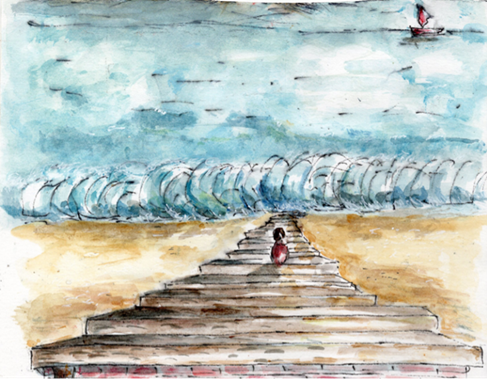
And yet, we should not forget that for many migrants, return is also a yearning for a homeplace. It is an aspiration for those who labour away from home under the pressure of economic duress. It is a series of intimate practices aimed at creating a safe space where dignity is restored, an incremental everyday effort toward the amelioration of individual and collective lives.
Return also constitutes a political claim. The war in Gaza reminds us in the most compelling way that return is both a twisted mirror image of a lost geography, and a right under international law. The notion of repatriation, which often implies reintegration into a system, a return home as a familiar place, may not exist.
Return is an ongoing process and a series of practices within migration.
Focusing on the multiple temporalities and spaces constitutive of return as a political, economic and legal act and right, as well as a subjective experience and claim, the conversation developed here wants to explore how refugees living under temporary protection regimes imagine the conditions for the possibility of return; how the restriction of asylum procedures and humanitarian protection or conditions of poverty and getting stuck in Europe impact decisions about going ‘home’; how people subjected to forced displacement and violence imagine and understand ‘the right of return’ in different stages of their protracted exile. Who is keen to return? Who is forced to return? Who refuses to return? How is it possible to stop involuntary returns? How do migrants and refugees mobilize their economic and political capital to secure the conditions significant for return? How do those who remained reconcile with the return of the displaced?
Funders
Various